

What Is Content Marketing Strategy?
What Is Content Marketing Strategy? A Beginner’s Complete Guide

No complicated terms. No confusing theory. Just a clear, simple guide with real examples to help you start content marketing from scratch.
Table of Contents
What Is Content Marketing?
Why Content Marketing strategy Matters for Beginners
Types of Content You Can Create
How to Build Your Content Marketing Strategy (Step by Step)
5 Common Mistakes Beginners Make
Free Tools to Get Started Today
You’ve probably heard that “content is king.” But what does that actually mean? And how do you use content to grow a brand, a business, or even a personal profile? This guide answers all of that — in plain, simple English — so that even if you’re a complete beginner, you’ll finish reading with a clear plan of action.
1 What Is Content Marketing?
For the purpose to bring people to your business and gradually gain their confidence, content marketing involves creating and sharing informative, engaging, or interesting material, such as articles, videos, or social media posts.
Instead of directly saying “Buy our product!”, content marketing says “Here’s something helpful. We hope you like it.” Over time, the people who enjoy your content begin to trust you. And people buy from brands they trust.
Think of it this way: imagine you want to learn how to bake a cake. You search Google, find a YouTube channel that teaches baking for free, and you love their videos. A few weeks later, that channel releases a baking course for ₹999. You’re likely to buy it — because they already helped you for free and you trust them. That’s content marketing working perfectly.
Example: HubSpot is a software company. Instead of running only ads, they publish hundreds of free blog posts, guides, and videos teaching marketing, sales, and business. Beginners find their free content through Google, learn from it, trust HubSpot, and eventually buy their software. Their free content brings in millions of visitors every month — without paid ads.
The Importance of Content Marketing, Especially for Beginners
If you’re just starting out as a student, freelancer, or small business owner, content marketing is one of the best tools available. This is the reason:
It’s Free to Start
It is not required to have a big budget. Creating a blog, Instagram profile, or YouTube channel is free. Time and effort are the only things you have to invest.
It Builds Trust Quickly
Even if you’re just getting started, people start to view you as an expert when you regularly contribute useful content.
3.It Works While You Sleep
A blog post you wrote six months ago can still bring new visitors today. Unlike ads, content doesn’t stop working when you stop paying.
4. It Improves Your Google Rank
New and useful information is highly favored by search engines. Your website has an additional opportunity to show up on Google for free with each new post you produce.
Were You Aware? Regular bloggers have 55% greater website traffic than non-bloggers. Compared to traditional marketing, content marketing is 62% less expensive and produces almost three times as many leads. (Source: DemandMetric)
Three Kinds of Content You May Create
Blog entries are only one type of content. You can utilize a variety of formats; choose the one that best fits your abilities and the habits of your target audience.
Blog Entries
articles that rank well on Google and provide answers to queries. ideal for continuous traffic.
Movies
YouTube courses, Instagram reels, or short explanations. Excellent for showcasing your unique qualities.
Social Media Posts
Carousels, quotations, tips, and behind-the-scenes information on Twitter/X, LinkedIn, or Instagram.
weekly or monthly newsletters sent to subscribers via email. really personal and promotes face-to-face communication.
Podcasts
recordings for people who prefer to hear rather than read. Outstanding for storytelling and interviews.
Infographics
information summaries in visual form. Excellent for Pinterest or Instagram and very shareable.
For example, a college student who is researching nutrition creates an Instagram profile where they share easy, healthful meal ideas. She posts 3 times a week — meal photos, quick recipe videos, and myth-busting carousels. After 6 months, she has 12,000 followers. Local health brands start sponsoring her posts. That’s content marketing turning a student into a paid creator.
You don’t need to be everywhere. You just need to be consistently helpful in one place — and the right audience will find you.
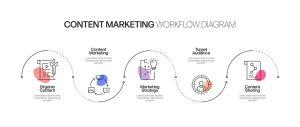
4. How to Build Your Content Marketing Strategy (Step by Step)
A strategy is simply a plan. Without a plan, most beginners post randomly and get frustrated when nothing happens.Here’s a simple, easy method for beginners:
Step 1: Identify Your Viewers
Ask yourself, “Who am I creating this for?” before beginning any project. Be specific. Everyone” is too confusing. Instead, “I’m creating content for college students in India who want to learn digital marketing skills to get freelancing jobs.”
Understanding exactly who your audience is makes it lot easier to decide what topics to cover, what language to use, and which platform to post on.
Questions to Define Your Audience
How old are they? What do they do for work or study?
What problems are they trying to solve?
What platforms do they use most Instagram, YouTube, LinkedIn?
What words do they use when they search on Google?
Step 2 — Pick Your Main Platform
Don’t try to be on every platform from day one. Choose a Main Platform to Focus on
Do not attempt to spread out across all platforms but focus on the one that receives the most attention from your target audience.
* Blogging and YouTube should be your choices if you wish to provide solutions, instructions, and guidance.
* If you are interested in reaching young people who like short videos, then concentrate on Instagram Reels, YouTube Shorts, and TikTok.
* LinkedIn is another good choice if professionals and businesses constitute your target audience.
* Facebook would be very useful if you work with parents or own small businesses.
* Blogging and emailing will definitely interest you if you enjoy communicating valuable information.
Step 3: Make a List of Ideas for Content
Make a list of at least 20 frequently asked questions by your audience. Every question can be used as a topic for a newsletter, blog post, or social media post.
For instance, some content suggestions for your topic, “Digital Marketing for Students,” could be:
* How may students who have no previous experience begin working as freelancers?
* How does SEO operate and what is it?
* How can I use digital marketing to make money?
* Which digital marketing competency should I master first?
* Which free tools are ideal for novices?
* How can I acquire my first customer?
* How much time does it take to become an expert in digital marketing?
* What distinguishes Google Ads from SEO?
* How do algorithms on social media operate?
* Which digital marketing certifications are worth getting?
The more questions you answer, the more valuable your content becomes for your audience.
By answering real questions, you create content that is useful, searchable, and relevant to your audience.
The best free tools for managing social media How much can someone who is new to digital marketing make?